
A common question when upgrading meeting rooms and collaboration spaces is simple:
Should you choose a wireless or wired presentation system?
Quick Answer:
Wireless presentation systems are generally the better choice for modern workplaces because they allow users to share content instantly from their own devices without cables, adapters, or fixed connection points. This improves flexibility, collaboration, and meeting efficiency.
The Solution:
For most organisations, a wireless presentation system provides the most practical and future-ready solution. It supports hybrid working, BYOD (Bring Your Own Device) environments, and seamless collaboration while reducing the delays and compatibility issues commonly associated with wired setups.


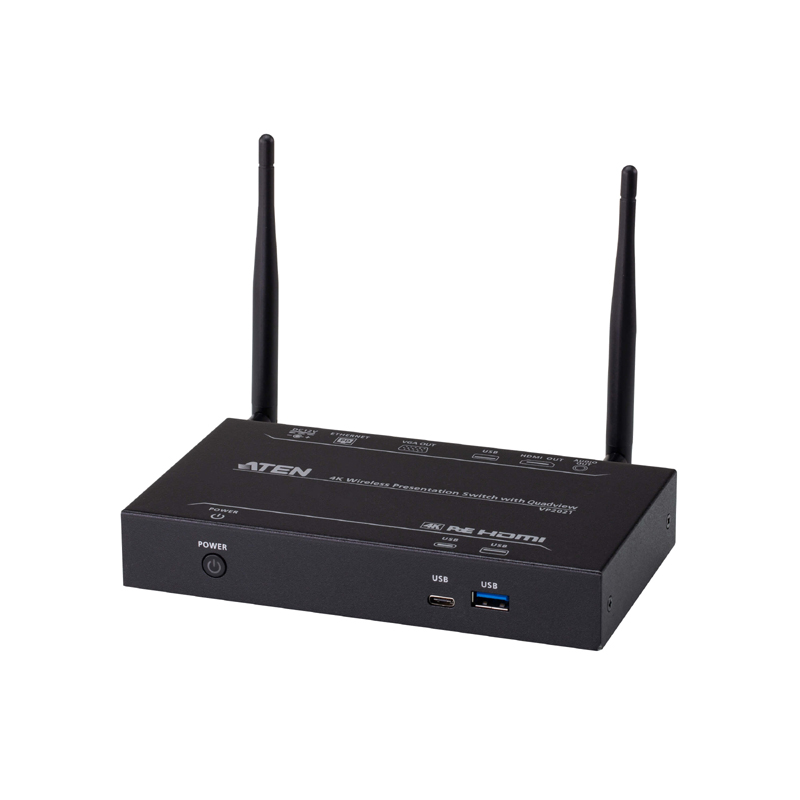

Want to find out more?
Choosing between wireless and wired presentation systems is a common challenge for organisations upgrading their meeting spaces. While both options have their place, the right choice depends on how your teams work and what level of flexibility you need.
Understanding Wired Systems
Wired presentation setups have been the standard for many years. They typically involve HDMI cables, adapters, and fixed connection points.
While reliable in controlled environments, they often introduce limitations:
- Restricted mobility for presenters
- Compatibility issues with modern devices
- Time lost connecting and switching cables
In environments with multiple users, these challenges can quickly impact productivity.
The Rise of Wireless Solutions
Wireless presentation systems are designed to remove these barriers. By allowing users to connect directly from their own devices, they eliminate the need for cables and adapters.
This results in a more flexible and user-friendly experience, particularly in shared meeting spaces.
Comparing Key Factors
Ease of Use:
Wireless systems offer a clear advantage with plug-and-play functionality, enabling users to connect instantly without setup.
Flexibility:
Wireless solutions support multiple users and devices simultaneously, making them ideal for collaborative environments.
Compatibility:
Modern wireless systems are designed to work across Windows, macOS, and Linux, reducing compatibility concerns.
Reliability:
While wired systems are traditionally seen as stable, advancements in dual-band wireless technology now provide strong, consistent performance.
When Wired Still Makes Sense
There are still scenarios where wired systems are suitable, such as:
- Fixed installations with a single dedicated device
- Environments requiring minimal user interaction
However, these cases are becoming less common as workplaces evolve.
The Practical Choice for Modern Workspaces
For most organisations, the need for flexibility, speed, and ease of use makes wireless presentation systems the more practical option.
They support modern working styles, including hybrid meetings and BYOD environments, while reducing the technical barriers associated with traditional setups.
Key Takeaway
If your goal is to improve collaboration and reduce meeting delays, wireless presentation systems provide a more adaptable and future-ready solution. Wired systems may still have niche applications, but they no longer meet the demands of dynamic, multi-user environments.