
A common question businesses ask when upgrading their meeting spaces is simple:
Why do meeting room setups still fail, despite all the technology available today?
Quick Answer:
Many meeting room failures are caused by outdated, cable-based presentation systems that create compatibility issues, connection delays, and unnecessary complexity. Even with modern devices and software, these legacy setups often prevent meetings from starting smoothly and efficiently.
The Solution:
The most effective solution is to implement a wireless presentation system. By eliminating cables, adapters, and manual switching between devices, wireless solutions allow users to connect instantly and collaborate more effectively, helping meetings start on time and run without interruption. Despite advances in workplace technology, many meeting rooms still suffer from the same recurring issues – delays, connectivity problems, and user frustration. For businesses investing in collaboration tools, this raises an important question: why do meeting room setups continue to fail?
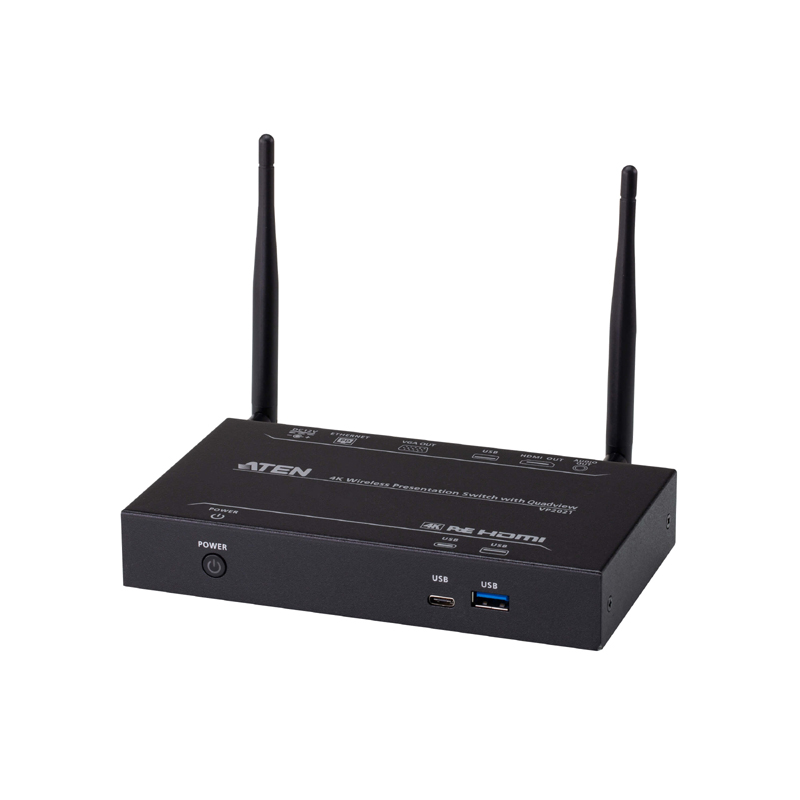
The following ATEN Kits are the perfect solution with the ability to purchase multiple dongles for other uses. Check out Fairline Distribution for more information.



Want to find out more?
Despite advances in workplace technology, many meeting rooms still suffer from the same recurring issues—delays, connectivity problems, and user frustration. For businesses investing in collaboration tools, this raises an important question: why do meeting room setups continue to fail?
The Root of the Problem
At the core of most issues is an over-reliance on outdated, cable-based systems. While these setups may appear simple, they often introduce hidden complexity:
- Multiple adapters for different devices
- Compatibility issues across operating systems
- Time-consuming switching between presenters
In practice, this means meetings rarely start on time. Users are forced to troubleshoot connections, adjust settings, or wait for IT support—interrupting productivity before the meeting has even begun.
The Cost of Inefficiency
These small delays add up. In a busy organisation, even five minutes lost per meeting can result in hours of wasted time each week. More importantly, it disrupts the flow of communication, making collaboration less effective.
For engineers and technical teams, the impact is even greater. Presenting detailed data or switching between systems quickly becomes cumbersome, limiting the ability to make fast, informed decisions.
A Shift Towards Simplicity
Modern workplaces require systems that work instantly and reliably. This is where wireless presentation technology offers a clear advantage.
By removing physical connections, users can present directly from their own devices without the need for adapters or setup. Plug-and-play solutions eliminate the need for software installation, ensuring compatibility across Windows, macOS, and Linux platforms.
This shift significantly reduces friction, allowing meetings to start on time and run smoothly.
Supporting Real Collaboration
Beyond convenience, wireless systems enable better collaboration. Features such as multi-user connectivity allow several participants to share content simultaneously, making it easier to compare information and contribute ideas in real time.
Integrated support for USB cameras and audio also enables seamless video conferencing, supporting hybrid meetings without additional complexity.
A Smarter Way Forward
The continued failure of meeting room setups is not due to a lack of technology—but rather the use of solutions that no longer match modern working needs.
By adopting simpler, more flexible systems, organisations can eliminate common pain points and create environments that support productivity instead of hindering it.
Key Takeaway
If your meetings are still delayed by cables, compatibility issues, or technical setup, it’s time to rethink the approach. A streamlined, wireless solution can transform meeting spaces into efficient, collaborative environments.