
What's the best way to manage network cables while allowing for future expansion?
Quick Answer:
A common mistake in network installations is creating large, tightly packed cable bundles that become difficult to identify and maintain over time. As networks grow, these installations can quickly become difficult to troubleshoot and modify.
The Solution:
Using Velcro cable ties alongside proper cable labelling and planned routing creates a more organised and scalable network infrastructure. Cables can be added, adjusted, or replaced without dismantling existing bundles, helping IT teams maintain reliability and reduce downtime as networks evolve.


Want to find out more?
How can you organise network cables without creating future maintenance headaches? As data networks continue to expand, effective cable management becomes increasingly important for reliability, performance, and serviceability.
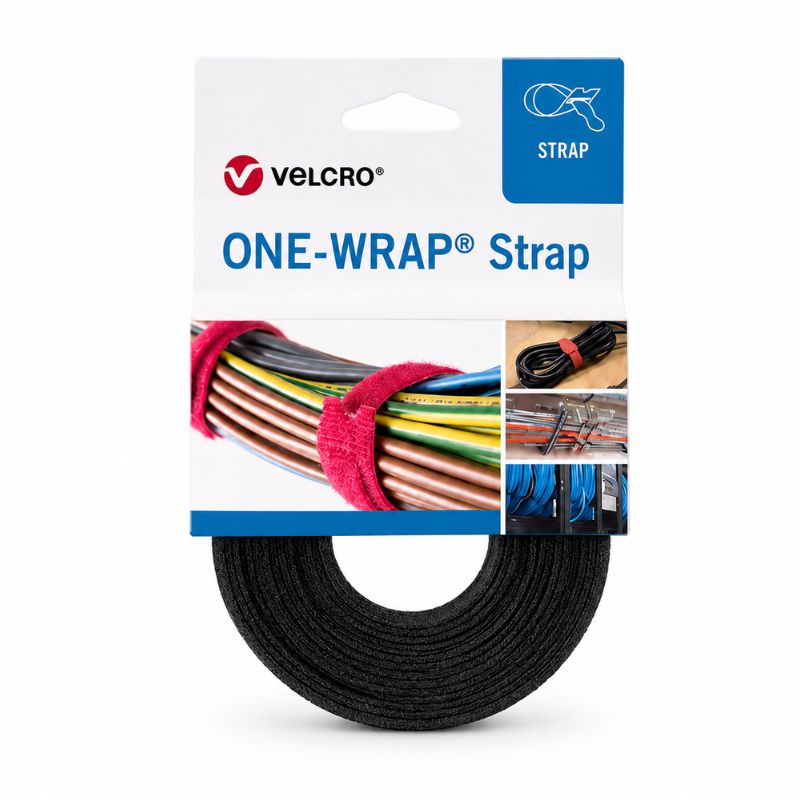
Velcro cable ties are widely used because they provide a secure yet flexible method of managing network infrastructure. Their reusable design allows IT teams and engineers to adapt installations as requirements change.
The first step is planning. Before cables are installed, determine cable routes, rack layouts, and expansion requirements. Well-planned cable pathways reduce congestion and make future changes easier to implement.
Next, create manageable cable bundles rather than combining large numbers of cables into a single group. Smaller bundles improve identification, airflow, and accessibility. When maintenance is required, technicians can quickly locate specific connections without disrupting unrelated circuits.
Velcro cable ties support this approach because bundle sizes can be expanded easily. New cables can be integrated into existing routes without dismantling the entire cable management system.
Cable identification is equally important. Every major cable run should be labelled according to a consistent standard. Labels combined with organised Velcro bundles help reduce troubleshooting time and improve operational efficiency.
Maintaining adequate bend radius is another key consideration. Excessive bending can affect cable performance and potentially shorten service life. Because Velcro ties generally do not require aggressive tightening, they help support proper routing while minimising strain.
A practical example can be found in office environments where network infrastructure continues to evolve. As additional workstations, wireless access points, and communication devices are installed, reusable cable ties make expansion straightforward and cost effective.
Regular inspection should form part of every cable management strategy. Checking cable bundles for overcrowding, damage, or routing issues helps prevent future problems. Velcro ties allow technicians to adjust installations quickly when improvements are needed.
At Fairline, customers often ask how to design network systems that remain easy to maintain over the long term. One of the most effective recommendations is choosing cable management products that support future changes rather than restricting them.
Ultimately, successful cable management is about more than appearance. Organised network cabling improves accessibility, reduces downtime, and allows systems to grow efficiently. Velcro cable ties remain one of the most practical solutions available for achieving these goals while maintaining a professional installation standard.